
Base building in Enshrouded 1.0: which no-build zones opened, what the Flame Altar controls, how storage upgrades work and which block recipes changed.
Enshrouded Base Building Guide: Locations, Blocks and 1.0 Changes
The biggest base building change in 1.0 is not a new block. It is that most areas previously marked as no-build zones are now fully accessible for player-built bases, which the official changelog says should allow "some interestingly placed player-built outposts". The second big change is Airborne Architect, a skill at the centre of the skill tree that enables building in a free-flying mode. Around those two, 1.0 reworked storage, raised prop durability, added the Gem Forge as a late-game base station, and made large player bases much cheaper to light.
- Most former no-build zones are open for bases. The official wording is "most", not all.
- Flame Altar count caps at 16 once Flame Level 11 is unlocked.
- Airborne Architect enables free-flying construction, so scaffolding is optional.
- Storage chests can be converted to Magic chests in place and both can be freely named.
- Base lighting performance improved sharply because point light shadows were reworked.
Picking a base location after 1.0
Location advice used to start with the no-build map, and 1.0 largely removes that constraint. The official notes say most areas that were previously marked as no-build zones have been made fully accessible for player-built bases, so the interesting decisions move from "where am I allowed" to "what do I want nearby".
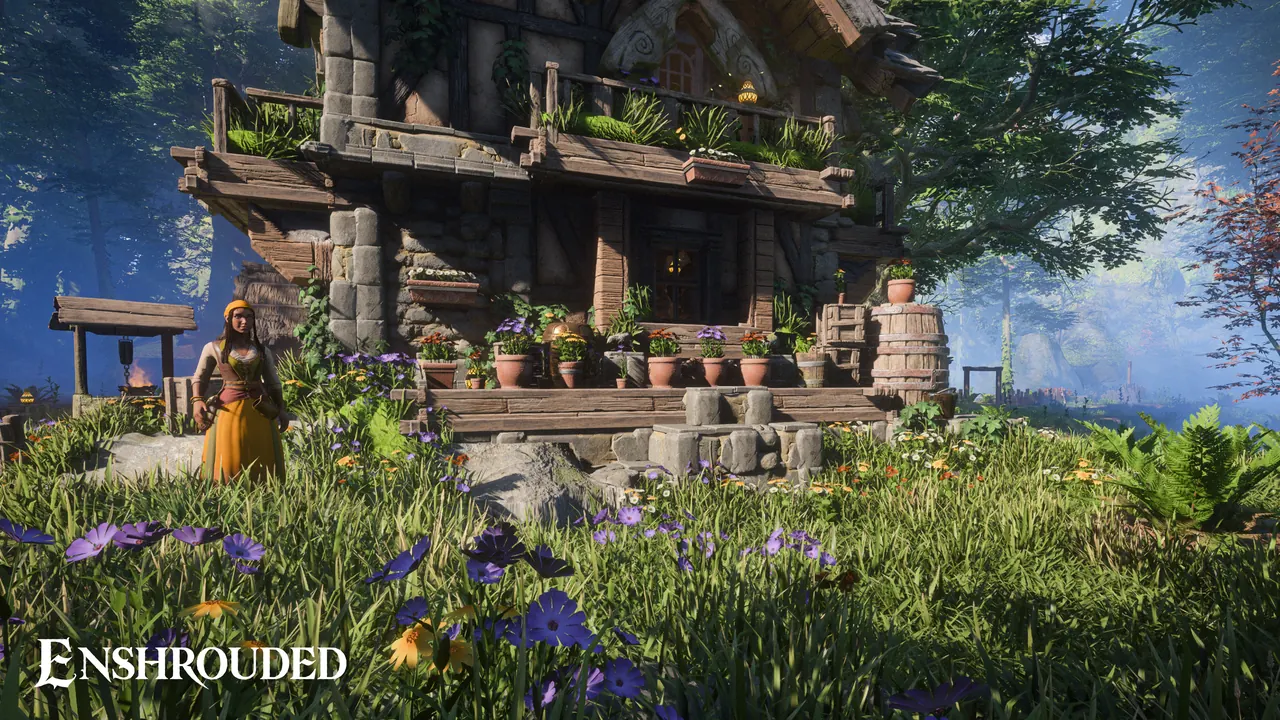
Three things are worth checking before you commit a Flame Altar:
- Old no-build edges. The most obvious new spots are the regions that used to be blocked, because other players have not built there yet and the terrain is often untouched.
- New edge-of-world areas. Springlands, Blackmire and the Kindlewastes all gained additional playable areas close to the edge of the world, with new quests and points of interest. The official note says these areas are less densely packed than the main path, which is exactly what makes them good base land.
- What the area produces. You will still walk to resources for the first hours, so a base near a biome transition saves time later.
The honest caveat is that the official material does not publish a best-base-location list or coordinates. Any ranked list of spots you find is community work, and terrain changes between patches have moved good spots before.
What the Flame Altar actually controls
The Flame Altar is still the base core. It defines the area you can build in and respawn at, and upgrading the Flame raises what the altar can support. The 1.0 change that matters for builders is the ceiling: when you unlock Flame Level 11, the maximum number of Flame Altars in the world is 16. The official notes describe it as free real estate, which is a fair summary of going from a couple of bases to a network of outposts.
The cost of reaching those levels came down as well. The 1.0 patch reduced the resources needed for Flame Level recipes at levels 6, 7, 8 and 9, and replaced Electric Organs and Poison Stings with more common resources in those recipes. If your last save stalled on an altar upgrade, that is the reason to retry it.
Two related notes for large bases:
- The patch added preventive measures for save data with an impossibly large number of Flame Altars. The official wording is that they cannot guarantee it will always work, so treat altar spam as a risk rather than a strategy.
- Layout is cheaper to change than it used to be. Terraform undo now works even when the backpack is completely full, with the caveat that resources are not returned to your inventory in that case.
1.0 also introduced a limit on how many factories can be placed in a world. The official notes call it very generous and say few players should ever hit it, with a warning message before the cap. If you are building an industrial base, spread production across altars instead of testing the ceiling.
Terraforming and the free-fly build mode
Airborne Architect is the standout building addition. It sits at the centre of the skill tree and enables building in a free-flying mode, which changes the workflow more than the feature list suggests. Walls, roofs and interior props can be placed from above instead of from a ladder, and tall base shells stop being a stamina problem.
Terraforming rules did not change in a way that alters what you can do, but two fixes matter:
- Building shapes no longer glitch when placed near the Shroud.
- Building previews are correctly hidden when another action blocks building, which removes the case where a preview appeared while you were sitting, climbing or fishing.
Terraforming undo with a full backpack is the other quality-of-life win. The resource refund is what you lose in that case, not the ability to correct a mistake.
Building blocks and where recipes come from
There is no official complete block list for 1.0, so the in-game recipe list stays the reference. What the patch notes do confirm is which materials and recipe families changed.
| Recipe or material | 1.0 change |
|---|---|
| Stone-based recipes | Now use the stone variation of the matching biome instead of relying on Springlands stone |
| Red marble columns and arches | New recipes, unlocked when you discover marble |
| Ectoplasm Block | Now a tier 2 building material |
| Hardwood, Revelwood tier | Terrain and material received a significant upgrade |
| Explosion resistance | Building blocks rebalanced to withstand explosions more convincingly |
| Props in general | Health points raised so they are less likely to be destroyed by accident |
The biome stone change is the one that quietly improves base building. Recipes that previously all demanded Springlands stone now pull from the stone type of the biome you are in, so a Blackmire base is no longer penalised for being far from where you started.
Ectoplasm stepping up to tier 2 is the most surprising change on the list. Ectoplasm was mainly a dungeon and dungeon-furniture material, and moving the block into tier 2 means Hollow Hall runs now feed your walls as well as your crafting bench.
Storage, Magic chests and upgrading them
Storage was the area 1.0 reworked the hardest, and almost every change removes a chore.
- Chests upgrade in place. Storage chests can be converted to Magic chests and upgraded without emptying them first or picking them up as a crafting resource.
- Earlier unlocks. Regular 24-slot chests and Magic chests can now be crafted earlier in the crafting progression.
- Quick Stash Station. The station was moved earlier in the progression and given a small side quest so players know it exists and helps with storage management.
- Naming. Storage chests and custom map markers can be freely named, which is the difference between a functional base and a warehouse you have to search.
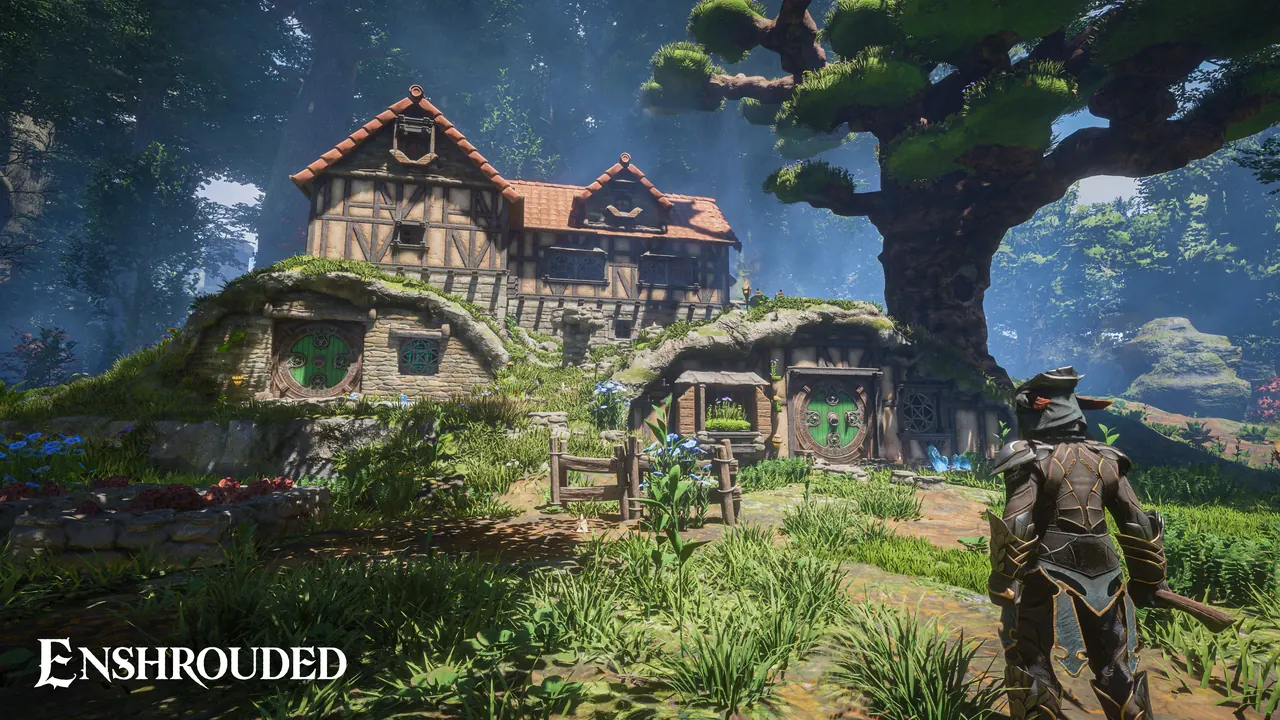
The Gem Forge arrives at the other end of the game. The official notes say players can place a gem forge station in the player base in the late part of the game, which makes the base the place where gem work happens rather than an overlay on the crafting menu.
Official source: Release trailer, changelog - Enshrouded 1.0
The official Enshrouded site and the Steam store page both carry the launch material behind these changes.
Base quality of life in 1.0
The patch notes contain a long tail of small fixes that matter once your base is real rather than a starter shack.
- Lighting performance. Point light shadows were reworked, and the official notes state that the performance impact of lighting a large player base dropped significantly. Lamp-heavy builds benefit most.
- Food on plates. Generally all foods can now be placed on coasters or food plates, with a few exceptions such as skewers and fish that did not look right. Fish trophy plates can be placed on the floor.
- Pot plants. Night plants are available as potted plants now, and pot sizes were added to the descriptions.
- Interior props. More props from Embervale were added to the crafting recipe lists, largely in response to community requests, along with furniture, door and placement fixes.
- Large base handling. A fix landed for an issue that prevented picking up objects in large and complex player bases, which was a real problem for anyone decorating at scale.
- Building hints. Placing voxel blocks directly from the action bar now shows a hint pointing you to the Construction Hammer, which the notes describe as usually faster and more convenient.
- Camera. Several camera issues while building and mining were fixed, including overly fast zooms and unwanted movement.
One thing to keep in mind is that some of these are fixes rather than features. If you last played in 0.8, a base that was awkward to decorate is simply less awkward now.
FAQ
Are there still no-build zones in Enshrouded 1.0? Yes. The official wording is that most areas previously marked as no-build zones are now fully accessible for player bases, which leaves some restrictions in place.
How many Flame Altars can I have? Unlocking Flame Level 11 raises the maximum number of Flame Altars in the world to 16.
Do I need to clear a storage chest before upgrading it to a Magic chest? No. Storage chests can be converted and upgraded in place, without emptying them first or picking them up as a crafting resource.
What does the Airborne Architect skill do? It enables building in a free-flying mode and sits at the centre of the skill tree.
Where is the Gem Forge placed? In your player base, in the late part of the game, once you have unlocked it. It is crafted and placed as a station rather than used from a menu.
Did building block recipes change in 1.0? Yes. Stone-based recipes now use the stone variation of the matching biome, red marble columns and arches were added, and the Ectoplasm Block is now a tier 2 building material.
Related Guides
-
Base logic belongs to a separate 1.0 system, and it is worth learning after your walls are up: Enshrouded Sparkworks Guide
-
Flame Level recipe costs dropped at levels 6 to 9, which changes your upgrade plan: Enshrouded Crafting Guide
-
Ectoplasm is now a tier 2 building material, and Hollow Halls are where it drops: Enshrouded Hollow Halls Guide
-
Chest loot and legendary chances feed directly into how you gear a base full of crafting stations: Legendary Gear in Enshrouded 1.0
-
Flame Altar and Flame Levels The altar upgrade path behind your altar limit and build radius.
More Enshrouded Guides
What Enshrouded 1.0 changed about bosses, including the reworked Albaneve Summits fight, stun tactics, and boss health recovery.
How to reach Cinder's Cradle in Enshrouded 1.0, what the lava ruins and floating islands contain, its 12 new Shroud Roots, and the Flame level to bring.
How crafting works in Enshrouded 1.0: which stations exist, crafting from storage, the Gem Forge and Quick Stash Station, and the recipes the patch rebalanced.
Enshrouded has no crossplay at 1.0, so PC and PS5 cannot share a world yet. Here is how co-op works, the player cap, permissions and progress sharing.
The server tool ships free with the game and is Windows only for now. Config fields, UDP port 15637, user groups and the new Automatic enemy scaling.
An Enshrouded Elixir Well is a Shroud pocket with a Shroud Root at the bottom. What it awards, why it may not reset, and what 1.0 did and did not change.
How many enemy types Enshrouded 1.0 adds, which factions got new variants, and how the reworked damage susceptibility system changes fights.
What the Flame Altar controls in Enshrouded 1.0, the 15 and 16 Altar caps, cheaper Flame level 6 to 9 recipes, and the level 11 Shroud pushback.