
All nine spells added in Enshrouded 1.0, how Eternal spell versions change the mana economy, and which summons earn a slot on your bar.
Enshrouded New Spells in 1.0: Eternal Spells Explained
1.0 adds nine entirely new spells to Embervale, turns summons into their own spell category, and gives every spell an Eternal version that casts without spending charges. If you remember one number, remember 22: that is how many tier 7 Eternal spell versions exist in 1.0, and they can now be upgraded like a weapon, perks included.
Enshrouded is the survival action RPG from Keen Games, sold on Steam for PC and the PlayStation Store for PS5. The official Enshrouded site hosts the launch material and patch notes.
Here is the short version before the detail:
- Nine new spells: Mana Drain, Entangle, Pillar of Flames, Blizzard, Ball Lightning, Summon Fire Totem, Summon Ice Totem, Summon Shock Totem and Summon Hollow Skeleton.
- Every spell now has an Eternal version that does not consume spell charges.
- Eternal spells and the three new Eternal arrows can be upgraded with perks, exactly like gear.
- Summon limits are raised by two new skills, Advanced Necromancy and Totem Mastery.
- The 1.0 skill tree was reset, so anyone loading an older save has to re-spend every point.
The Nine Spells Added in 1.0
Keen Games described 1.0 as the patch where mages finally got attention, and the spell list backs that up. It is not just more damage. Utility, crowd control and area denial all show up, and one entry opens an entirely new spell category.
| Spell | Role in the kit | What it actually does |
|---|---|---|
| Mana Drain | Resource | Saps a fixed amount of mana per second from an enemy and adds it to your pool |
| Entangle | Crowd control | Locks down tougher enemies so a group can be split or bursted |
| Pillar of Flames | Single-target damage | A fire nuke for one priority target |
| Blizzard | Area damage | AoE for packs, aimed at a ground position |
| Ball Lightning | Area damage | Shock AoE that hits groups |
| Summon Fire Totem | Summon | Deployable fire turret |
| Summon Ice Totem | Summon | Deployable ice turret |
| Summon Shock Totem | Summon | Deployable shock turret |
| Summon Hollow Skeleton | Summon | A melee companion that fights alongside you |
Two of those, Blizzard and Ball Lightning, are the answer to the one thing that used to punish casters hardest: being surrounded. Both are area spells, and 1.0 gave area spells a ground cursor at the target position so you can place them deliberately instead of hoping the auto-aim picks the right enemy.
Mana Drain is the quiet winner for anyone running long fights. Because it moves a fixed chunk of mana per second into your own pool, it turns a high-cost rotation from a burst window into something you can sustain, which matters once your spells start costing more.
Area spells in 1.0 are placed where you point on the ground. Aim Blizzard or Ball Lightning at the middle of a pack, not at the enemy nearest your crosshair, or you waste the cast on one body.
Totem Summons and How They Behave
Summons are the genuinely new idea in 1.0. Before this patch you fought with your own body and your own spells. Now you can put something else on the field and let it work while you reposition.
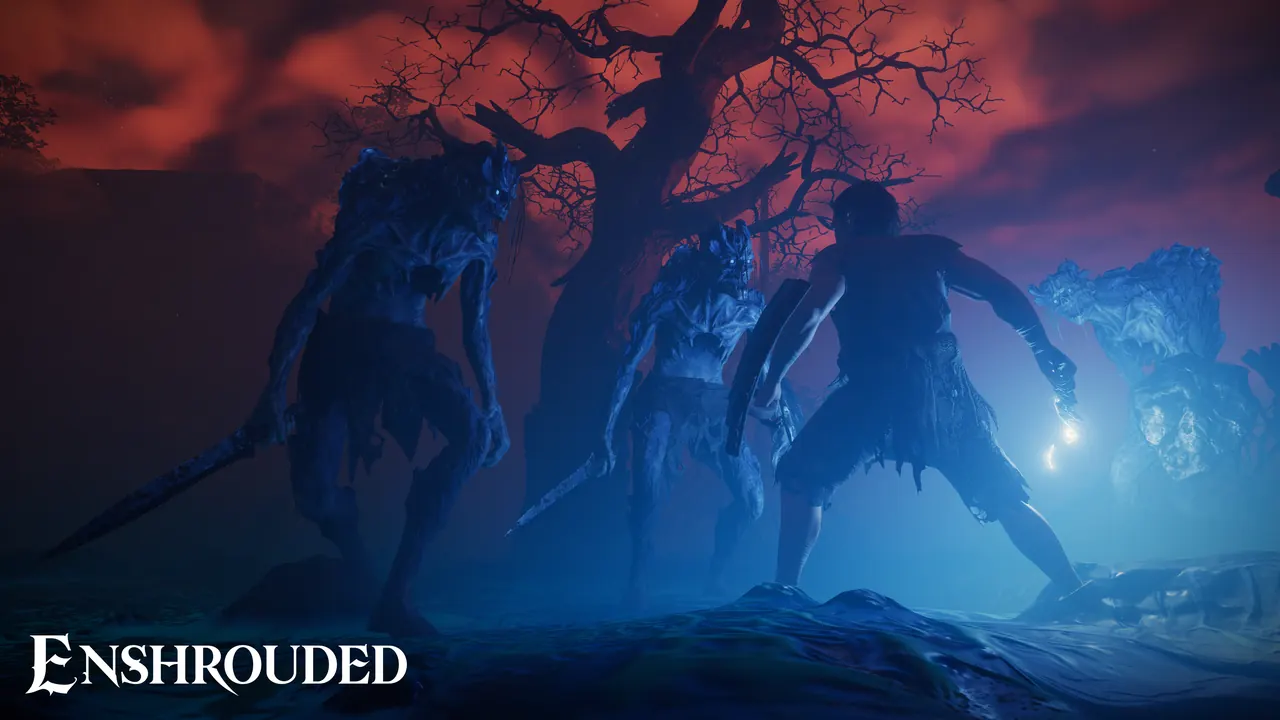
The category covers three totems and a skeleton. Totems are deployed stationary pieces of damage that keep firing while you do something else, which makes them a strong pick for defensive fights where you want to hold a doorway or an altar approach. Summon Hollow Skeleton is different: it is a mobile companion that walks into melee and stays there.
Two new skills raise how many of these you can keep out at once. Advanced Necromancy increases the number of summonable skeletons, and Totem Mastery increases the number of totems. If you intend to actually lean on summons rather than just splash one, both nodes are mandatory, because the base cap is not meant to carry a full build on its own.
There is a real cost to the summon life, though, and it is not mana. Skeleton companions in 1.0 got a specific fix worth knowing about: their attacks are no longer interrupted when an enemy hits them. Keen's own note is honest about what that means. Their job on the battlefield is not to top the damage meter; it is to keep contributing instead of being stunned out of every swing. Treat them as pressure and distraction, not as your primary damage.
Official source: 1.0 Combat: changes and additions
What Eternal Spells Change
Every spell in the game now has an Eternal version, and this is the change that alters how casters actually play. Normal spells consume spell charges from your inventory. Eternal spells do not. They cast for mana only, which removes the low-grade anxiety of running dry mid-fight.
The trade-off used to be that Eternal spells were a convenience pick with modest output. 1.0 changes that by making them upgradeable. An Eternal spell can be leveled and given perks the same way a weapon or a piece of armor can, and the example Keen gives is reduced mana cost. That is a large deal, because reduced mana cost on an Eternal spell compounds with Mana Drain and turns a spell you cast occasionally into a spell you cast constantly.
The tier structure also opens up. There are now 22 tier 7 Eternal spell versions, and many of them unlock at the current highest progression tier. On top of the spell list, 1.0 adds three Eternal arrows: Eternal Fire arrow, Eternal Shock arrow and Eternal Bone arrow. They are upgradeable with perks as well, so archers got a piece of the same change.
The practical consequence is that your late-game bar stops being about stockpiles. It becomes about which Eternal versions you have actually invested levels into.
Upgrading Eternal Spells and Arrows
Upgrade services for Eternal spells and arrows are handled by the crafting survivors tied to the combat classes, and 1.0 added those services so you do not have to hunt a separate system. Bring the spell or arrow to the right survivor and treat it like any other upgradeable piece of gear.
A few things to plan around:
- Pick a small number of Eternal spells and level those, rather than spreading upgrades thin across everything you own.
- Reduced mana cost is the perk to chase on your spam spell, the one you cast dozens of times per fight.
- Level your Eternal arrow alongside your bow if you shoot at all, because the arrows now scale with upgrades instead of sitting flat.
- Do not ignore the mundane tiers. The new Eternal versions are gated behind progression, so you spend a stretch of the campaign on lower-tier Eternals.
Note that 1.0 also revisits the crafting side of ordinary spell charges. Mined gems are now an ingredient for spell-charge recipes, while several rare or awkward resources were removed from those same recipes. Lower-tier resources were trimmed too, so mages are not dragged back into biomes they have outgrown just to top up charges.
If you are still deciding where to put your points, the beginner guide covers the early level-up order and which nodes pay off first.
The 1.0 tree was reset on purpose. If you walk out of your base with unspent points, you are fighting with a weaker character than the game expects, and the new summon skills sit behind enough prerequisites that a half-spent tree will not reach them.
Spell Charges After 1.0
Spell charges did not disappear just because Eternal spells exist. Early and mid game you still run ordinary charges, and 1.0 changed where they come from rather than removing them.
The headline is the ingredient swap. Mined gems joined the spell-charge recipes, and the resources that were painful to farm were cut from them. That combination is meant to make replenishing a stockpile less of a chore. It does not make charges free, so if you are leaning on a non-Eternal spell for your main damage, keep an eye on your stock before a long boss attempt.
Building a Spell Rotation
A rotation that works in 1.0 has three moving parts: a cheap repeatable cast, a finisher, and something that keeps you alive or mobile while both cool down.
Start with a low-cost Eternal spell as your filler. That is the spell you upgrade first for reduced mana cost. Layer Mana Drain into the rhythm against anything with a long health bar, because it refills the resource your filler is burning. Save the big area spells, Blizzard and Ball Lightning, for the moment a pack clumps up, and keep Entangle in reserve for the enemy you cannot afford to let reach you.
Wand users get a fourth piece. The wand now has a heavy attack that pierces enemies, so it hits the body behind the first target and interrupts the attacks of weaker enemies. Two new wand skills, Aerial Wand Attack and Wand Evasion Attack, add a mid-air area option and a wider piercing evasion shot. Then there is Blast and Cast: after a wand critical strike, the base damage of your next staff attack within 10 seconds goes up by 50 percent. That skill is the reason a wand-and-staff caster can open with a wand crit and immediately punish with a staff spell.
Weapon gems slot into this picture too, and some of them now interact with the summon changes directly. The weapon gems guide covers which gems changed and how the necromancy gems fit a caster build.
FAQ
What are the new spells in Enshrouded 1.0?
Nine of them: Mana Drain, Entangle, Pillar of Flames, Blizzard, Ball Lightning, Summon Fire Totem, Summon Ice Totem, Summon Shock Totem and Summon Hollow Skeleton.
What is an Eternal spell?
An Eternal spell is a version of a spell that does not consume spell charges when you cast it. Every spell has one in 1.0, there are 22 tier 7 Eternal versions, and they can be upgraded with perks such as reduced mana cost.
How do I summon more skeletons?
Take the Advanced Necromancy skill to raise the skeleton summon limit, and Totem Mastery for the totem limit. Both are new in 1.0 and both sit in the reworked skill tree.
Do Eternal spells replace spell charges completely?
No. Charges still exist and still matter while you are leveling, and 1.0 changed their recipes rather than removing them. Eternal versions are the late-game answer.
Was the skill tree changed in 1.0?
Yes, and it was reset. If you load a save from an earlier version, you have to re-spend every point, so plan your new build before you head back out.
Related Guides
-
Weapon Gems in Enshrouded 1.0 Which gems changed, including the necromancy gems that pair with the new summons.
-
Best Armor Sets in Enshrouded 1.0 How armor unlocks now follow Flame upgrades, so your caster set keeps pace with new spells.
-
Enshrouded Bosses in 1.0 The reworked Albaneve Summits fight, stun options, and how boss health recovers between attempts.
-
Enshrouded Beginner Guide Where to put your first points before a spell build comes online.
-
Enshrouded Enemy Types in 1.0 Enemy susceptibilities decide whether your new crowd-control spells actually land.
More Enshrouded Guides
Enshrouded warrior build for 1.0: stamina now recovers while blocking, heavy attacks hit groups, and the Albaneve boss finally gives melee an opening.
Enshrouded ranger build for 1.0: Puncture, Barrage and Survival Instinct, the three new Eternal arrows, aim assist settings and the reworked ranger armor tiers.
What Enshrouded 1.0 changed about bosses, including the reworked Albaneve Summits fight, stun tactics, and boss health recovery.
How to reach Cinder's Cradle in Enshrouded 1.0, what the lava ruins and floating islands contain, its 12 new Shroud Roots, and the Flame level to bring.
How crafting works in Enshrouded 1.0: which stations exist, crafting from storage, the Gem Forge and Quick Stash Station, and the recipes the patch rebalanced.
Enshrouded has no crossplay at 1.0, so PC and PS5 cannot share a world yet. Here is how co-op works, the player cap, permissions and progress sharing.
The server tool ships free with the game and is Windows only for now. Config fields, UDP port 15637, user groups and the new Automatic enemy scaling.
An Enshrouded Elixir Well is a Shroud pocket with a Shroud Root at the bottom. What it awards, why it may not reset, and what 1.0 did and did not change.